Adhering to healthcare standards is important for hospitals as failures could lead to problems of different nature. The various responsibilities of healthcare providers range from keeping clinical records and dealing with biological waste to fighting fires in their facilities. Hospitals need to comply with numerous regulatory requirements and it pays off to implement compliance techniques in the framework of compliance management.
Medasus provides assistance to healthcare projects through its hospital establishment service, medical equipment supply and compliance support.
Table of Contents
- Understanding Healthcare Compliance
- Why Compliance Matters for Hospitals
- Key Areas of Healthcare Compliance
- The Role of Compliance Consultancy
- Benefits of Improving Hospital Standards
- How Medasus Healthcare Supports Healthcare Projects
- Frequently Asked Questions
Understanding Healthcare Compliance
Healthcare compliance is the act of complying with the laws, regulations, standards, and professional requirements pertaining to healthcare establishments. These laws can relate to the safety of patients, clinical practices, qualifications of employees, medical documents, operation of facilities, and the medical equipment.
Hospitals must determine the laws applicable to their type of institution, geographical location, type of ownership, and type of clinical services being provided. Compliance does not pertain only to a one-time process which is executed before the opening of a hospital. It mandates constant supervision, documentation process, staff awareness, and implementation of regular review procedures.
Development of the accurate compliance framework facilitates the process of delegation of responsibilities, creation of records, detection of fires, and resolution of problems before getting backed up.
.Why Compliance Matters for Hospitals
Compliance supports safer healthcare environments and more reliable hospital operations. When policies and procedures are clearly defined, staff members can better understand their responsibilities and follow consistent practices.
Important benefits include:
- Patient safety: Supporting appropriate clinical and infection prevention procedures.
- Operational consistency: Establishing clear processes for everyday activities.
- Risk management: Identifying compliance gaps and implementing corrective actions.
- Documentation: Maintaining accurate records for reviews and inspections.
- Patient confidence: Demonstrating a commitment to responsible healthcare delivery.
Compliance also helps management prepare for regulatory inspections and accreditation assessments where applicable. However, meeting basic legal requirements and obtaining accreditation are different processes, and hospitals should understand the requirements relevant to each.
Key Areas of Healthcare Compliance
Hospitals need to review several areas to maintain appropriate standards.
Regulatory Registration and Licensing
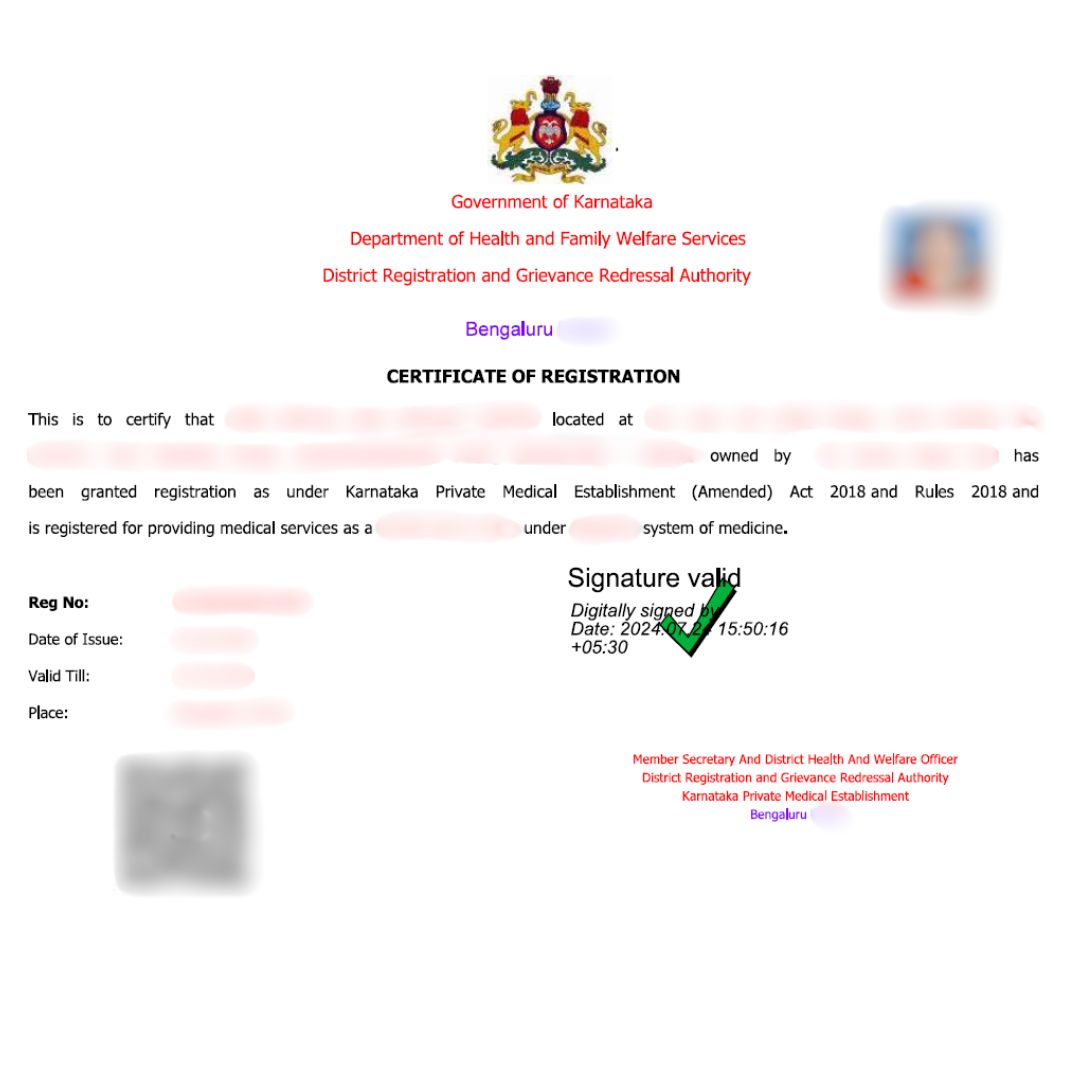
Healthcare facilities must identify and maintain the registrations, licences, and approvals applicable to their operations. In Karnataka, this may include requirements under the Karnataka Private Medical Establishments (KPME) framework, depending on the facility.
Patient Safety and Infection Prevention
Hospitals should establish procedures for hand hygiene, sterilisation, infection prevention, clinical safety, and incident reporting. Staff training and routine monitoring help support these practices.
Biomedical Waste Management
Healthcare facilities must follow applicable biomedical waste management requirements, including segregation, storage, handling, and disposal through authorised arrangements.
Medical Equipment Management
Equipment should be suitable for its intended use, properly installed, and maintained according to manufacturer guidance and applicable requirements. Maintenance records, user training, and equipment checks help support safe operation.
Documentation and Data Management
Hospitals should maintain appropriate patient records, staff documentation, policies, and operational logs. Access to confidential information must be managed responsibly and in accordance with applicable privacy and legal requirements.
The Role of Compliance Consultancy
A healthcare compliance consultant educates hospitals regarding the requisite requirements and sets out compliance programs. The consultants may evaluate the current processes, analyze the documents, determine the loopholes, and advise corrective actions.
Based on the scope of engagement, the support could include mapping the requirements, developing policies, assisting in documentation, making the staff aware, assessment of the preparedness, and conducting follow-up reviews.
For hospitals aiming for NABH accreditation, the preparation could include reviewing the quality system and patient safety measures, obligations of the hospitals, and requisite documents based on standards.
The consultant can offer guidance and provide support but does not take responsibility for the execution of the requirements and receiving approvals.
Benefits of Improving Hospital Standards
Enhancing hospital standards is not simply a matter of preparing documents for inspection. It also involves incorporating compliance into everyday operations in both clinical and administrative settings.
Regular internal assessments are crucial in allowing management to spot systemic issues, follow corrective actions, and ensure compliance with policies and procedures. Staff training makes sure that employees understand their responsibilities, while clear reporting procedures allow for prompt responses to safety problems.
Hospitals can use their indicators of performance, schedules for maintaining equipment, and records of assessments to ensure that processes are being carried out consistently.
The principles of continuous improvement are very helpful in enabling hospitals to adjust to changes in regulations, services, and other operational aspects.
How Medasus Healthcare Supports Healthcare Projects
Medasus Healthcare offers healthcare solutions, which include the establishment of hospitals, provision of medical equipment, construction planning, and facilitation of the legal process. The services can assist people who initiate the establishment of a new hospital or wish to upgrade their existing hospital facilities.
A new facility and an upgrade require Healthcare Compliance Consultancy: Improving Hospital Standards to underline the importance of comprehension of laws in formulating structured work processes.
Hospitals must have an understanding of the requirement in terms of consultancy services, legal requirements, and responsibilities for approval.
Conclusion
Compliance in healthcare is a continuous obligation, which contributes to safety of patients, preparedness for regulations, and secure operation of hospitals. By looking into relevant requirements, providing timely compliance documentation, training personnel, and eliminating possible gaps, hospitals can enhance their standards.
By making proper planning and getting relevant professional support, Healthcare Compliance Consultancy: Improving Hospital Standards can be very helpful for healthcare institutions striving to improve the process of compliance with Medasus Healthcare assistance.
Frequently Asked Questions
What is healthcare compliance consultancy?
It is professional support that helps healthcare facilities understand applicable requirements, review existing processes, organise documentation, and address compliance gaps.
Why is healthcare compliance important for hospitals?
It supports patient safety, consistent operations, responsible documentation, risk management, and readiness for relevant inspections or accreditation assessments.
What does KPME mean in Karnataka?
KPME refers to the Karnataka Private Medical Establishments framework, which governs applicable requirements for private medical establishments in the state.
Is NABH accreditation the same as legal compliance?
No. Legal compliance involves meeting applicable laws and regulatory requirements, while NABH accreditation evaluates healthcare quality and safety against specified standards.
How often should hospitals review compliance?
Hospitals should monitor compliance continuously and conduct periodic reviews based on applicable regulations, operational risks, internal policies, and changes to services.